|
By: Michael Manion |
|
|
Page Views: 3,995 |
| Using ONA techniques to provide physical care to others; how to absolve yourself from past karma. |
| Estimated reading time: 10 minute(s) (2268 words) |
Physical Care Techniques for Others
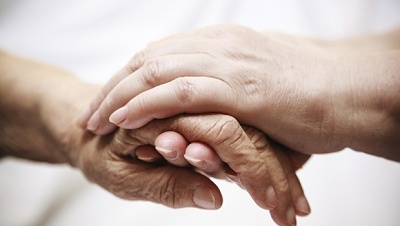
There are several ways in which you can administer to others when their bodies have
been injured or traumatized in any way. These we shall call Care Techniques for
Others. They show you how to care for them and can actually alleviate many physical
problems.
The physical body learns to protect itself in many ways. One of these ways is to
stabilize an injured area through the process of swelling. Another way is
through numbness. Each society teaches ways to get rid of pain. These techniques
do not necessarily deal with the actual pain or injury. (For example, taking aspirin or
ibuprofen doesn't necessarily cure the actual cause of a headache, which is why
they so often recur.) The most effective way to remove the cause of pain is by
learning how to focus and direct our energies.
The following Care Techniques present the beginning steps to true recovery.
Directing Focus
When a person is really taken up with the pain of an injury and very all over the
place, direct their attention by saying "close your eyes and focus on my hand squeezing
yours." Clasp their (uninjured) hand and gently squeeze it. Repeat this as many times
as needed until the person appears more focused and you are better able to communicate
with them.
Handling A Temperature
When a person has a fever, direct their attention to things around them in. Each
time, you say "Look at that (object)," then say "Hold it completely still." Follow this
by asking, "Did you hold it completely still?". If they didn't, request them to do it
again until they can. When they feel they can hold it completely still move to a
different object. Do this with several different objects. This will assist in bringing
a high pitched fever to where it is working for them and not against them.
The reason this works is that fever occurs in the body as a way to rid it of harmful
bacteria or viruses. The bacteria or viruses, being much, much, smaller than a Human,
are less tolerant of temperature changes than we are; the higher temperature kills
them. However, if the body panics in response to a resistant bacteria, the temperature
may rise dangerously high, in which case the fever itself can cause damage. Keeping the
body's temperature from rising too high allows us to experience less discomfort so we
can focus on healing.
Another approach to dealing with fever is to pay attention to the body's requests
for temperature change. In cases of serious infection, fevers are most effective when
they reach high temperatures briefly to kill as many bacteria as possible, then drop
quickly to avoid damaging the body. Once the body has recovered, the temperature can
again rise to kill more bacteria.
To assist the body, pay attention: If you feel cold, the body wants to warm up
(hence the chills that often accompany fever). So, get into a hot bath, as warm as is
comfortable. Soak until you feel warm, which is the body's way of saying it
wants to cool down. At that point, simply pour cool water into the tub until you again
feel comfortable. Prepare to soak for an hour or more, at all times, keeping the water
temperature comfortable to you. In this way, you can assist the body in defending
against invading bacteria effectively and with a minimum of discomfort.
Handling Unconsciousness
Just because a person doesn't react to stimuli, doesn't mean he or she is
totally unconscious. There are many degrees of unconsciousness.
The first rule of unconsciousness: Guard very carefully what you say. Statements
heard (or even overheard) by an unconscious person often form the basis for an encysted
energy program, called an engram, that can become the source of real
psychological problems later on. Especially watch out for statements that could be
interpreted later as commands, such as, "You're not really hurt!" or "I think you've
really hurt yourself!" or "How can you be so stupid!"
Most times that a person is knocked out, the period of unconsciousness will be
brief, and you can wait it out with them in supportive silence. "I'm with you," is a
safe thing to say, if you feel you must say something.
If time passes and the person remains apparently unresponsive, you will want to
determine if he or she is really unconscious, or just paralyzed. Even if
unconscious, as stated, there are degrees of this. If you suspect that a person is
unconscious, you should try to exchange hand signals with them. If you can establish a
hand squeeze as a signal, have them squeeze your hand once for "yes" and twice for
"no". If the hands are unavailable, you can have them flex a toe or finger or eye brow.
Use whatever works to establish communication. Proceed by having them touch something
like a blanket or grass. Take their hand or whatever body part is mobile and ask, "Do
you feel this (object)?" Have them signal to you "yes or "no". Repeat this many times
or as many times as is needed to bring them further into consciousness. If a person is
unconscious as to be in a coma, you may need to practice this technique on a daily
basis.
Handling Immediate Injury
When an injury is fresh, follow this simple procedure to re-establish the proper
flows of energy throughout the body. An injury to the body acts like an earthquake and
sends shock waves throughout the body.
With trauma, erratic energy vibrations can become locked up in various other areas
of the body. This happens specifically around the joints. Another phenomenon is called
reflexive injury, in which uninjured parts of the body manifest the pain of
injured parts. For example, after injuring your left hand, the right hand may start to
hurt. This is the body's way of trying to discharge the excess traumatic flows of
energy. The following technique can be used while you contact the injured area:
It's quite simple: Have them repeat the motion that caused the injury. Slowly, of
course, so that the injury isn't made worse! If the injury was caused by a moving
object, make sure the object has been brought to a stop. Make sure anything hot has
been cooled, and anything very cold has been warmed to a safe temperature. If there was
electric current present, turn it off.
The repetition of motion should be as complete as possible: Have them touch the
injured part to the area that injured it. As much as possible, Ask them to duplicate
the motion exactly as it happened originally. The welled-up energy will begin to
dissipate. Request them to keep doing this until all the trauma, unconsciousness and
pain are gone.
The injured person may experience several levels of discomfort. The pain may even,
briefly, become worse than before! Just keep touching the injured body part to the area
or object that caused the injury. Whatever shows up, fear or pain, will eventually
lift, as long as you have them do enough times.
Be careful to recognize when the pain or trauma is gone. That is the time to end
off. If you suspect something has shifted ask them to tell you if it has.
Handling Non-Immediate Injury or Illness
This technique applies when the cause of injury is no longer available and pain is
still prominent. This can also be applied to alleviate pain of any kind.
It is another simple technique. All you need say is, "Do you feel that?" while
touching various areas of the body. Acknowledge whatever is said. For injury, touch all
around the injured area, starting in the area farthest from the head. This assists in
re-establishing nerve responses to the area. Also address reflexive injuries such as
the other hand, foot, or whatever. Keep doing this until there is a release of the
welled up energies in that area.
When a person is very ill, use this technique on both sides of the whole
body. Problems can occur from not treating the extremities to equalize the balance to
both sides, not completing this technique until release of the pain and not repeating
this on each day following if it is needed.
Handling Shock
There are twelve nerve channels that travel along the sides of the spine. When a
person is in shock or receives a shock to his or her system, a wave of energy travels
along the nerves and can cause temporary paralysis. In this case, the muscles can
contract and lock the bones into all sorts of uncomfortable positions.
A good way to unlock this condition is to lightly massage the areas along the spine,
carefully relaxing the muscles so that the bones can move into normal position. This
can assist in reestablishing blood flow and nerve response.
Also, lightly massaging along the nerve channels of the contracted areas can bring
about better flow to and from the affected areas.
Follow this with Care Technique Five, to unblock the nerve channels and allow any
pain or electrical charges to release through the nerve channels.
Releasing Old Vows
When you were a child, did you and friends ever make solemn vows to (for example)
never like girls, or boys, or to be friends forever, or to always be true to the team?
Would it surprise you to know that your Second Field takes such vows seriously?
In a past life, if you took a vow of poverty or obedience to (say) a religious
order, that might block you from HAVING things or authority now!
Another example: Suppose, in a past lifetime, you were so wealthy that you presented
a target to kidnappers. (Although it still happens occasionally, in some past cultures
kidnapping for ransom was a common occurrence.) Suppose your family, in order to keep
control of the money for themselves, decided not to pay the ransom and you were killed.
Can you imagine vowing, as you died, to never again own so much as to attract
attention? Or even vowing never to have money, again?
Of course, these vows no longer serve you. But the energy remains in your Second
Field, from where it can subconsciously manifest in your life. Such a manifestation
limits rather than expands and should be released to achieve full growth and
consciousness.
Since vows are made with ritual, it takes ritual to rescind them. (For example, a
nun may receive a dispensation
from the Pope so that she can leave the
convent and get married.) There is a ritual for releasing generic vows, that is, the
ones most entities have made in the course of many lifetimes. These include the vows
taken by priests, nuns, members of secret societies, and even marriage vows. (Although
marriage vows specify till death do we part
, some souls intend eternity,
not realizing that eternity includes many lifetimes.) This ritual can be performed as
part of a group.
A second ritual should be done in private, as it involves a meditation designed to
locate specific vows made regarding one's purpose in life. We will learn that
ritual in Workshop Five.
Releasing Generic Vows
Place yourself in a quiet, sacred space.
Surround yourself with twelve candles.
Do the 12-Systems Breath.
Read this statement out loud:
I, ______________________ do request of my Innermost Self, ____________ [ God, the
Universe, All That Is, etc. ], and the Holy Twelve levels of my being, to release me
from all vows I have ever made, in ignorance or in truth, to any false messiah, to any
brotherhood or sisterhood, any other entity, or to myself as the Creator that are no
longer contributing to my highest good. I particularly wish to release all vows that I
have ever made, that would block me from experiencing health, wealth and happiness.
Please assist me in releasing these vows so that they no longer limit me. I ask that
all restrictions be lifted and eliminated so that I may expand and experience in
accordance with my highest good, using
ONA,
SIM-KA
DAU-I-O
The Sound of Connection
The Sound of Mobility
The Sound of Aspiration
The Sound of Awaken
The Sound of Communication
The Sound of Transformation
The Sound of Perception
The Sound of Enlightenment
The Sound of Emanation
The Sound of Continuance.
This concludes Workshop Two, Click the Next button below to fill out a
questionnaire and investigate your next steps.