|
By: Paul S. Cilwa |
|
|
Page Views: 3,837 |
| Living with a belief in the mechanisms of reincarnation and karma requires a re-evaluation of pretty much every opinion and attitude we possess. |
| Estimated reading time: 6 minute(s) (1315 words) |
Does a belief in reincarnation produce happier, healthier, people?
Is there an advantage to accepting this belief?
Of course, Tibet isn't particularly overpopulated; nor is
it a hell-hole of poverty and disease. Its worst fate in recent times has been
its takeover by China, which in turn has become far more dangerous to the world
and restrictive of Human rights since its Communist revolution, which outlawed
all religious beliefs, including that of reincarnation.
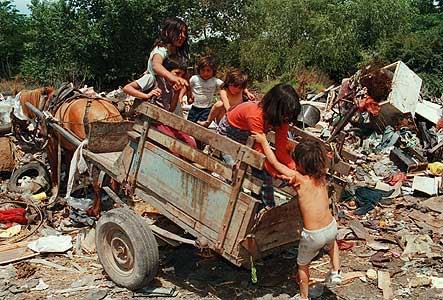
In fact, among modern countries suffering from poverty,
overpopulation and disease, one must consider South America, in which most
residents are Catholic and do not believe in reincarnation. So, perhaps,
belief in reincarnation neither causes nor prevents dysfunctional cultures.
The reason that reincarnation ever received blame for poverty and disease was
the fact that some believers in reincarnation also believe
that punishment from past misdeeds is the reason for all misfortune in
this life. Rather than become caught in a pattern of cause-and-effect (called karma
in Sanskrit), these believers refuse to become involved in any other
person's problems. The traditional belief also sees people as victims,
though of their own karma. The karma is in the past; the punishment is in the
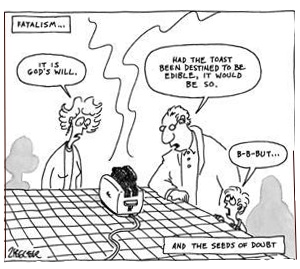
present and can't be avoided. That implies a certain degree of fatalism, and
still doesn't leave much room for upliftment in this lifetime.
But, just as there are many ways in which Christianity has
found expression, believers in reincarnation come in many flavors. Perhaps more
typical is the Tibetan Buddhist, who maintains a constant awareness of the
sacredness of all life, and thus avoids killing even insects.
There are newer attitudes arising, however. The American
spin on the belief may be giving it its most sophisticated slant. This new
approach suggests that, by maintaining a heightened awareness of one's
own karmic debts, one can avoid the ill effects of karma and become a happy,
self-determining, being. Furthermore, the new approach sees karma, not as
punishment, but as balance and an opportunity for the soul's learning
and experience.

How to gain this heightened awareness? The first step is to
imagine oneself as one's being: the spiritual being, or soul,
from which your conscious self arises.
This being understands, as we understand the weather, the
flow of universal energies throughout space and time. This being knows the
lessons that must be learned, and the circumstances under which they can be
learned most effectively. Together with all other beings, it works to choose just
the right circumstances for birth and the early years, so that the resulting
personality will naturally slide into the circumstances it needs. Happiness is
not a goal, here; neither is wealth, health or any other particular state,
except in how that state will encourage the experiences the Innermost Self
understands are needed.
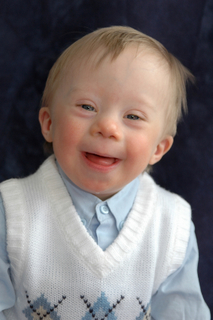
And in other cases, the baby may not have any karma to deal with at all;
he or she may be an enlightened being come to provide loving lesson opportunities for its parents.
Thus, when a baby is born, it has just the genes needed to produce
the ideal body for the lifetime ahead. This may not be a
healthy body, but it will be a body in which the proper lessons can be learned.
Its parents are the perfect parents for what it must learn, for the
person it must become. If the parents are fighting and break up shortly, that
was foreseen. If a new father or mother comes along, that was foreseen. It
isn't an unchanging fate that forces these situations; it is energy flows and
probabilities, clearly visible to the Innermost Self and the higher selves of all
those involved.
It's been said that crib death is often the result of a
baby's family circumstances unexpectedly changing after birth, so that the
future experiences will no longer produce the needed result. The baby leaves
that life early, so that a more appropriate situation can be found.
The Consequences of Assistance
Now, I've just turned much of what most Americans believe
upside down. Our economic structure is based on the theory of victimhood. That
lawyers profit from it is obvious; but so do insurance companies, home and
business security firms, the health care industry, and even the non-profit
rescue industry.
Consider what happens when you do send just 49 cents a day!
to feed the starving
children
in some village a celebrity has-been has cried over: The parents in this
village, unwilling to practice either birth control or restraint, have
overpopulated their areas until the land can no longer feed them; that's
why they are starving. If we feed the children, we will help them to grow
into adults who overpopulate even more, and become ever more dependent on our handouts.
What happens when they, and others like them, have taken all we can give?
Even greater starvation, in greater numbers, of their children.
(This has already happened, in Ethiopia in the 1980s, for one example.)
Even while the villagers are accepting handouts that prevent them from starving,
they lose their self-esteem and ability to care fore themselves. No, not lose
; they
abdicate their responsibility to themselves. And thus they've made themselves victims.
Christmas Island

There's a small island in the Pacific called Christmas Island, so named because Captain Cook
discovered it on Christmas Day, 1777. The United States annexed it in the Second World War;
its tiny population of happy, productive fishers was too small and unaware to offer any protest.
Now, here's an odd fact: If someone makes no money, even though they have plenty to eat
and a comfortable home, they are considered by the US government to be poor
…and
are entitled to food stamps.
Every month, therefore, the government plane lands on
Christmas Island to deliver to the population their quota of food stamps. Now,
there are no stores on the island; so the plane also carries packaged American
food such as canned tuna, Cheerios, and marshmallows. The islanders trade the
food stamps for the packaged food, and the plane leaves.
The present generation of Christmas Islanders do not fish.
They don't know how. Their parents saw no reason to fish when food arrives by
plane, monthly; and so they never taught their children. They cannot build
canoes anymore; nor can they repair or weave nets. Previously a marvelously
healthy people, they now host many diseases of malnutrition, because no one ever
taught them how to combine the strange foods to make nutritional combinations.
(They think nothing of serving, for example, peas with whipped cream.) With
nothing to do all day, some of the islanders have turned to crime and even
violence, which was also, previously, unknown there.
Are these people victims?
Only of their own weak wills. They were not children; they
were adults wise to the ways of a world that provided for them and gave them
happy, fulfilled lives…but they gave in to the promise of free food. After
all, no one forced them to accept the food stamps, and their own culture
warned of the dangers of sloth. The knowledge was available, and they
chose to ignore it, to go the easy way.