|
By: Paul S. Cilwa |
|
|
Page Views: 3,737 |
| The concept of reincarnation was so ingrained in the early Christian church that it took 800 years to wipe it out! |
| Estimated reading time: 4 minute(s) (802 words) |

Many centuries ago reincarnation was a widely accepted belief. Early
philosophers and Christian fathers and saints believed in and supported that
concept. There is evidence that Jesus and his followers believed in it,
too—evidence that remains in the Bible.
Who were some others?
- Plato (582-507 BCE)
- Origen (185-254 CE)
- St. Clement of Alexandria (150-220 CE)
- St. Gregory (257-332 CE)
- St Augustine (354-430 CE)
So, what happened? At what time in religious history did the one
life
concept originate? Who came up with this teaching?
During the first 300 years of the early Church, reincarnation was widely
accepted by many of the early Christians, including
Origen,
whom the Encyclopedia Britannica hailed as the most prominent of the
church fathers with the possible exception of (Saint) Augustine.
In
addition, the Gnostic gospel, Pistis Sophia,
quotes Jesus as saying that … souls are poured from
one into another of different bodies of the world.
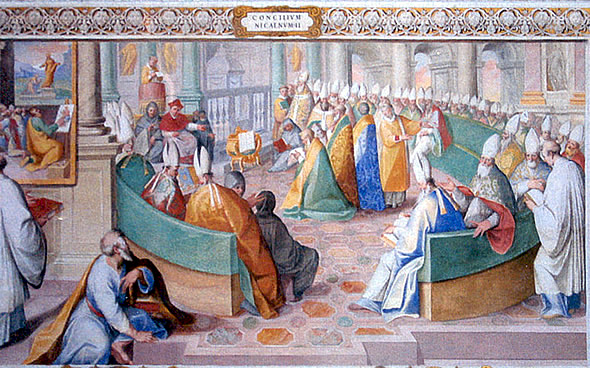
However, in the 4th century there arose a political pressure to remove the
concept from the religion of the day. In America, we are so accustomed to the
separation of church and state that it is hard to imagine a time when an emperor
could appoint a Pope; but when Constantine was the emperor of Rome, he appointed
a Pope named Damascus. In conjunction with that, Constantine and his puppet Pope
founded the Council of Nicaea.
Its ostensible purpose was to translate the Scriptures from Aramaic into Latin,
their contemporary language; but, as they did so, they also attempted to purge
everything out of the Scriptures of the New Testament that spoke of reincarnation.
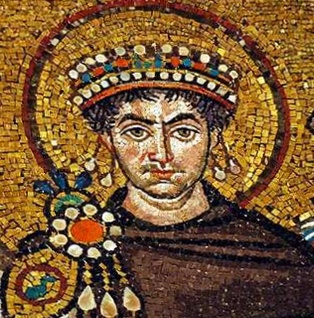
Then, in the year 553 CE Emperor Justinian called for the Fifth Ecumenical
Council of Constantinople. Such Councils had always been (and have been since)
convened by the Pope, not by secular leaders. That Justinian called this
Council—and that the Pope refused to attend—points out the secular nature of
this Council in spite of the fact that its results changed the Church forever more.
Understand the math? The concept of reincarnation was so ingrained in the
early Christian church that it took 800 years to wipe it out!
A related concept was the idea that Jesus was the Son of God rather
than a Son of God. That is, that he was different from the rest of us in
some fundamental way. This became a problem because the Church had always said Jesus had
incarnated as a baby in Mary's womb; and since they didn't want us to think that
just anyone could do that, they had to contradict Jesus' own statements (as reported, still,
in the Gospels) that he was just like everyone else. The Council declared that anyone who declared otherwise
was, again, anathema
.
And yet, in the Gospels Jesus called himself the son of man,
and
declared that we would do greater things than he had!
Why was reincarnation banned? Simple. Under the concept of reincarnation God
does not punish anyone. We are the ones who are responsible for the
choices we make. We are also the ones who will decide how any of our negative
actions (karma) will be healed with love during a future life. This belief
system does not require a formal church with doctrines, dogmas and donations.
In essence, if someone believes in reincarnation that individual does not need anyone
to serve as an intermediary between himself or herself and our Source. God
is within everyone!
It's easy to see why the early Church and future Popes condemned this belief.
There would be no reason to follow their own man-made religion which was based
upon the dogma that God judges and punishes, heaven and hell, etc. And yet, one
could miraculously be saved from all of this through the Church, especially
through generous donations. These dogmas of fear and guilt made people totally
dependent upon the church. Sadly, it's been that way ever since, with an entire
culture convinced that we only live once, and with constant reminders that this is
the case. YOLO, anyone?